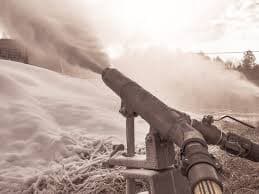
About snowmaking and the guide.
What is this? -> This is a platform that provides the total collective available research about the snowmaking process and a place that accepts and displays any new information that can be discovered and released to the public.
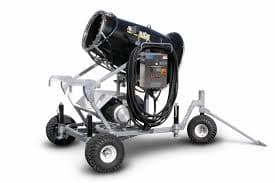
Level 1 -> Snow Making Science, types of snow guns and how they work.
Level 2 -> Tour of the snowmaking guide, and a look into what makes snow guns work.
Level 3 -> Explains how you can help to find more information and contribute.
Level 4 -> Gives access to the main Hub for information.
Introduction to Snow Making!
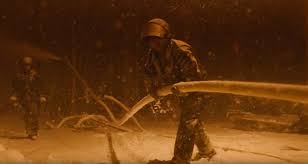
Snowmaking 101 - Nucleation
Water molecules need a nucleation site to transition to a solid.
In the atmosphere, water uses dust as nucleation sites to form snow. However, snow needs to form exactly where the water is output. It would be impossible to get enough dust to surround exactly where the water is to form snow.
Therefore, instead of micro dust particles, micro flash-frozen water is used.
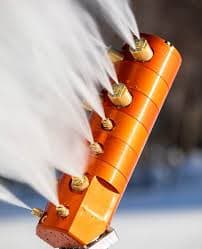
To flash freeze water, compressed air is mixed in, causing the water to flash freeze and become the nucleation site for the snow.
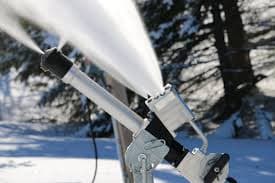
Nucleator
Snowmaking 101 - Snowflake
Knowing that the nucleation site is where the snowflake is formed, all that needs to happen is adding water in standard cold conditions to form the snowflake.
Restrictions
Snow can only be made when it is below 32 degrees. However, because of the low proximity to the ground, the time to freeze is reduced, so generally snowmakers aim for 27°F. The temperature used is not ambient temperature but rather wet bulb, a combination of humidity and ambient temp.
In the atmosphere, there are many cold and warm drafts allowing for multiple freezing and thawing cycles, leading to larger snowflakes. However, being so low to the ground, snowmaking snowflakes often have very few cycles, leading to smaller flakes and inevitably more compact snow. In fact, it is so compact that generally the snow cats/groomers groom the snow rather than compacting it.
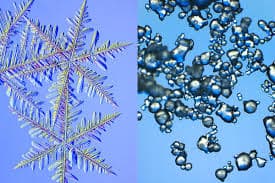
Snowmaking 101 (Put It Together)
- Air and water combine to form small frozen water particles.
- Water is then added and freezes on these particles, creating snowflakes.
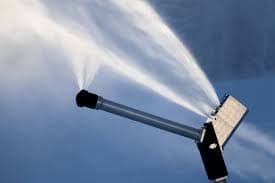
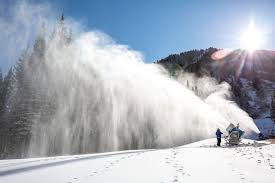
- Hang time (the time snow has to form before landing) allows flakes to dry, melt, refreeze, and collide, creating larger and higher quality flakes. More hang time generally means higher quality.
Definitions